 한국어
 English
 Español
 Français
 Português
 Deutsch
 Italiano
 Русский
 العربية
 简体中文
 香港中文
 日本語
 Türkçe
 Nederlands
 Bahasa Indonesia
OEM Decking Starts with the Project Specification
As the owner of a WPC factory in Guangdong, China, I have spent more than ten years turning overseas customers’ drawings and performance targets into manufactured decking products. A successful custom wpc decking system is not simply a board in a chosen colour. It is a coordinated package of boards, joists, clips, fasteners, trims, packaging and installation guidance, designed for the climate and building practices of its destination market.
We begin cooperation by checking the intended application, local weather exposure, expected foot traffic, subframe arrangement and relevant standards. A residential garden terrace has different demands from a hotel poolside or a public walkway. We ask for the board dimensions, required span, surface finish, colour references and preferred installation method, then identify details that could affect production or service life. Early agreement on tolerances and testing avoids costly changes after tooling has been made.
Profiles, Materials and Tooling for Local Requirements
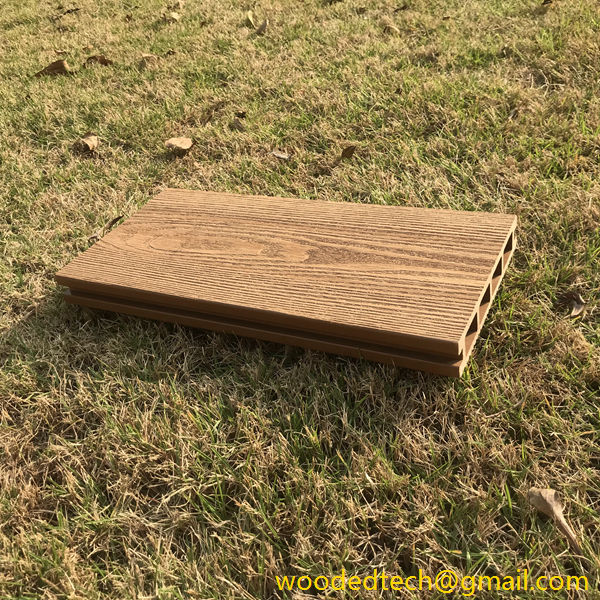
Extruded WPC combines wood fibre with a polymer matrix and carefully selected additives. Each choice influences stiffness, water absorption, colour stability, surface appearance and processing behaviour. Our formulation team adjusts the mix to suit the profile and the customer’s requirements, while production engineers set extrusion parameters for consistent dimensions and a well-formed surface. A hollow profile may reduce weight and material use, while a solid board may suit a design that calls for greater mass or particular machining details. Neither option is universally better; the right choice depends on support spacing, product geometry and application.
Custom profiles require close work between the buyer’s design team and our mould engineers. We review cross-sections for wall thickness, rib placement, drainage and the fit of clips before committing to a die. Small design changes can improve material flow and reduce deformation without altering the intended appearance. Where colour matching matters, we develop samples against a physical reference and confirm the result under agreed lighting conditions. Surface embossing, brushed finishes and co-extruded caps can also be assessed, with sample boards approved before the specification is locked.
Quality Control from Raw Materials to Finished Boards
Reliable output begins with control of incoming materials. We check wood flour condition and polymer and additive batches against internal requirements, because variation at this stage can show up later as unstable colour, poor bonding or inconsistent extrusion. During production, operators monitor temperature, line speed, cooling and profile dimensions. Our inspection team checks board appearance and key measurements at defined intervals, rather than relying only on a final sample taken after the run.
For OEM orders, the inspection plan should match the agreed specification and the product’s intended use. Depending on the project, this may include dimensional checks, density, water absorption, bending performance, surface wear or colour consistency. We document the agreed sampling method and acceptance limits before mass production. When a result falls outside the target, the production and quality teams investigate the cause and record corrective action. This gives the customer traceable information and helps us keep repeat orders aligned with the approved sample.

Complete System Design and Practical Installation
Boards perform as part of an assembly, so the supporting structure and fixing method deserve the same attention as the visible surface. We help customers match joist material and spacing, clips, starter fasteners, edge trims and stair details to the selected profile. Expansion gaps must account for board length, expected temperature range and installation conditions. Guidance should also state how installers handle cut ends, perimeter drainage and ventilation beneath the deck. Clear drawings and a practical installation manual reduce site interpretation and help protect the finished result.
Packaging is another engineering decision. Export cartons, protective separators, pallet dimensions and container loading plans affect damage rates and landed cost. We confirm bundle length, identification labels and packing marks for the customer’s warehouse and distribution process. For private-label programmes, packaging artwork and product codes can be coordinated with production planning, while keeping batch identification available for quality follow-up. These details are particularly useful for importers serving contractors across several regions.

Cooperation That Continues After Shipment
International OEM work requires regular communication across time zones and disciplines. We nominate contacts for technical questions, sample approval, production scheduling and export documentation, and we keep decisions in written specifications rather than leaving them in informal messages. Before a large order, a pilot run can confirm that the approved profile, colour, packaging and installation components work together. This gives both sides an opportunity to resolve practical issues before production volume increases.
After shipment, feedback from installers and end users helps improve the next production cycle. We review installation concerns, transport damage and performance observations with the customer, then distinguish manufacturing issues from conditions such as inadequate subframe spacing or restricted drainage. For established programmes, retained samples and order records support more consistent replenishment. A Guangdong manufacturer should offer more than extrusion capacity: dependable formulation, controlled tooling, documented inspection and responsive technical cooperation are what make a custom wpc decking system viable for global markets.