 Français
  English
  Español
  Português
  Deutsch
  Italiano
  Русский
  العربية
  简体中文
简体中文  香港中文
香港中文  한국어
한국어  日本語
日本語  Türkçe
  Nederlands
  Bahasa Indonesia
 Idées créatives de jardin de terrasse composite pour de beaux espaces de vie en plein air
Le terrassement composite est rapidement apparu comme un favori parmi les propriétaires qui cherchent à améliorer leurs espaces de vie en plein air.Avec un mélange de fibres de bois et de plastique recyclé, le terrassement en plastique en bois capuché (WPC) offre un attrait esthétique impressionnant tout en offrant durabilité et faible entretien.Lorsque vous explorez les idées de jardin de terrasses composites, il est essentiel de peser les avantages par rapport au bois naturel et aux alternatives WPC solides, en particulier en termes d'entretien, de durée de vie et de valeur globale.
Questions de maintenance: composite vs bois
L'un des avantages significatifs du WPC plafonné est ses exigences minimales d'entretien par rapport au bois naturel.Alors que le terrassement en bois exige souvent des colorations et une étanchéité fréquentes pour protéger contre les éléments, le terrassement composite est conçu pour résister à la décoloration, à la coloration et à la moisissure.Cela permet non seulement d’économiser du temps, mais aussi de réduire les coûts associés à l’entretien.Les propriétaires peuvent profiter de leurs espaces extérieurs sans le souci constant de l'entretien qui accompagne souvent les terrasses en bois traditionnelles.
Les ponts en bois peuvent éclabousser, se déformer et se fissurer au fil du temps, ce qui pose des risques pour la sécurité et nécessite des réparations.Le WPC plafonné, cependant, est conçu pour résister aux rigueurs de la vie en plein air.Il conserve son aspect, en évitant les pièges communs associés au bois naturel.Pour ceux qui chérissent leurs espaces extérieurs mais redoutent la pensée de l’entretien, la terrasse composite offre une solution convaincante.
Comparaison de la durée de vie: à quoi s'attendre
Lorsque vous investissez dans des matériaux de terrasse, la durée de vie est un facteur crucial à prendre en compte.Le WPC solide peut avoir une durée de vie plus courte que le WPC plafonné, en grande partie en raison de son manque de couches protectrices.Le terrassement en bois typique peut durer environ 10 à 15 ans, en fonction des facteurs environnementaux et des pratiques d'entretien.En revanche, le WPC plafonné bénéficie d’une durée de vie impressionnante de 25 ans ou plus, ce qui en fait un choix plus économique au fil du temps.
La construction à double couche de WPC plafonné améliore non seulement la durabilité, mais protège également plus efficacement contre les éléments.Cette longévité signifie moins de remplacements et moins de tracas pour les propriétaires qui cherchent à créer des espaces extérieurs intemporels.De plus, à mesure que les matériaux de terrasse progressent, le WPC plafonné surpasse de plus en plus le WPC solide en termes d’intégrité structurelle, garantissant que les espaces de vie extérieurs restent sûrs et visuellement attrayants pour les années à venir.
La question de l'éclatement et du déchargement
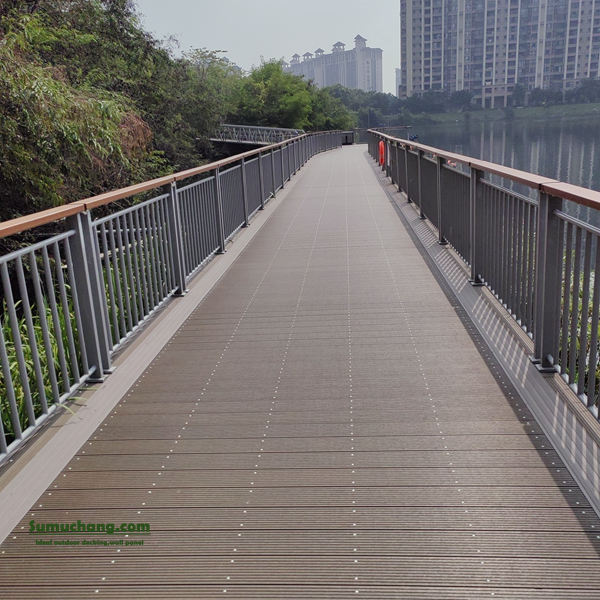
Les étinessements et les déformations sont des préoccupations fréquentes pour ceux qui choisissent le bois naturel, en particulier dans les régions où les conditions météorologiques sont extrêmes.Le bois est sensible à l'absorption d'humidité, entraînant un gonflement et éventuellement une déformation.Cela affecte non seulement l'attrait esthétique d'un pont, mais peut également présenter de graves risques pour la sécurité des familles et des invités.Le WPC plafonné, d'autre part, est conçu pour résister à ces problèmes, offrant une surface lisse et cohérente qui est sûre pour les pieds nus, ce qui le rend idéal pour les jardins et les zones au bord de la piscine.
Les propriétaires peuvent profiter de la créativité dans leurs conceptions extérieures sans se soucier de l'intégrité structurelle de leur terrasse.La résistance de WPC à l’éclatement permet également une gamme plus large d’idées de jardin de terrasses composites, permettant des caractéristiques telles que des sièges intégrés, des jardinières et d’autres éléments architecturaux.Sa polyvalence invite à la créativité, permettant aux propriétaires de profiter pleinement de leurs espaces sans le souci de la détérioration dans le temps.
Valeur Total Réel Au -- Dessels
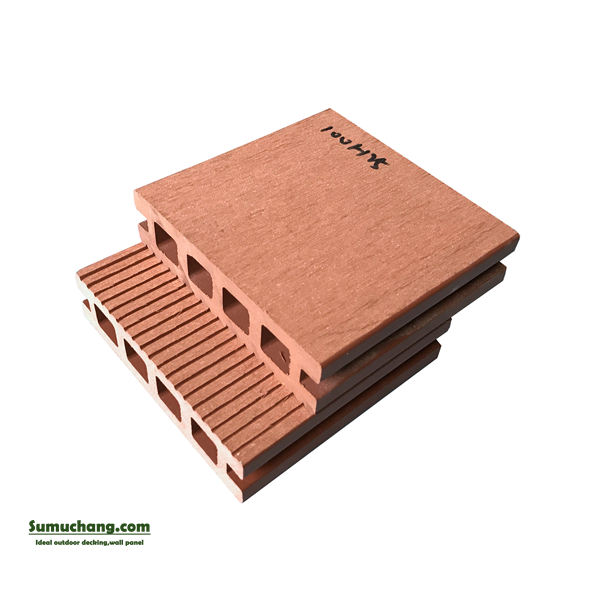
Lors de l'examen de la valeur totale des matériaux de terrasse, l'investissement initial doit être mesuré en fonction des avantages à long terme.Le WPC plafonné peut avoir un coût initial plus élevé que les options en bois massif, mais les économies d'entretien, de remplacement et de sécurité s'accumulent rapidement.Avec une durée de vie allant au-delà de 25 ans, l'investissement de coût par an dans le WPC plafonné est considérablement inférieur à celui de ses homologues du bois.
De plus, les options de style disponibles avec des matériaux composites ouvrent des possibilités infinies pour les conceptions créatives.Des élégants espaces de restauration en plein air aux salons de jardin sophistiqués, la flexibilité esthétique de la terrasse composite supporte une variété de styles de vie et de styles personnels.À mesure que les espaces de vie extérieurs deviennent de plus en plus importants pour la détente et le divertissement, le choix des matériaux peut avoir un impact significatif sur l’atmosphère et la fonctionnalité globales.
Adopter des choix durables
La durabilité environnementale est de plus en plus à l’avant-garde des choix des consommateurs.Le WPC plafonné est fabriqué à partir de matériaux recyclés, ce qui en fait une option plus durable par rapport au bois conventionnel, qui implique souvent des pratiques de déforestation et de récolte non durables.En choisissant WPC plafonné, les propriétaires contribuent à la conservation de l’environnement tout en profitant de l’esthétique et de la performance haut de gamme.Cet aspect respectueux de l'environnement améliore l'attrait des idées de jardin de terrasse composite, car elles s'alignent sur un engagement en faveur de la durabilité.
En intégrant soigneusement WPC dans les espaces extérieurs, les propriétaires peuvent créer de belles zones fonctionnelles qui favorisent la détente et l'interaction sociale.Avec la myriade d’avantages offerts par les matériaux composites, il est clair qu’ils constituent un choix supérieur pour ceux qui cherchent à améliorer leurs expériences de vie en plein air.Alors que la créativité s’épanouit dans la conception extérieure, le WPC plafonné fournit une base fiable pour donner vie à des idées de jardin innovantes.