 Türkçe
  English
  Español
  Français
  Português
  Deutsch
  Italiano
  Русский
  العربية
  简体中文
简体中文  香港中文
香港中文  한국어
한국어  日本語
日本語  Nederlands
  Bahasa Indonesia
 Kahve kompozit zemin kaplaması, sıcak ve davetkar dış mekanlar yaratmak için popüler bir seçim olarak ortaya çıkmıştır. Bu yenilikçi malzeme, geleneksel ahşabın estetik cazibesini modern kompozit teknolojisinin avantajlarıyla birleştiriyor. Kahve kompozit zemin kaplamasının üretim süreci, dayanıklılığına, sürdürülebilirliğine ve genel performansına katkıda bulunan birkaç temel adımı içerir.
Kahve kompozit zemin kaplaması üretiminin ilk aşaması hammadde seçimini içerir. Kompozit zemin kaplamasının ana bileşenleri ahşap lifleri ve plastiktir. Kahve kompozit zemin kaplaması için genellikle geri dönüştürülmüş ahşap lifleri kullanılır. Bu lifler kereste fabrikası atığı, talaş veya geri kazanılmış ahşap gibi çeşitli kaynaklardan gelebilir. Geri dönüştürülmüş malzeme kullanma tercihi sadece çevresel sürdürülebilirliği desteklemekle kalmaz, aynı zamanda nihai ürüne benzersiz bir doku ve görünüm sağlar. Plastik bileşen tipik olarak geri dönüştürülmüş polietilenden yapılır ve bu da zemin kaplamasının dayanıklılığını ve su direncini artırır.
Hammaddeler tedarik edildikten sonra bir temizleme ve hazırlama sürecinden geçerler. Bu adım, nihai ürünün kalitesini etkileyebilecek her türlü yabancı madde veya kirleticinin giderilmesi için çok önemlidir. Ahşap lifleri doğru nem içeriğine ulaşmak için kurutulurken, plastik de harmanlama için doğru formda olmasını sağlamak üzere işlenir. Bu hazırlık aşaması, dış ortamlarda iyi performans gösterecek yüksek kaliteli bir kompozit malzemenin temelini oluşturur.
Üretim sürecindeki bir sonraki adım, ahşap liflerinin ve plastiğin harmanlanmasıdır. Bu, homojen bir karışım sağlayan gelişmiş karıştırma teknolojisi kullanılarak yapılır. Karışım ayrıca UV direnci, renk tutma ve küf direnci gibi performans özelliklerini geliştiren katkı maddeleriyle de zenginleştirilebilir. Kahve kompozit zemin kaplamasında, dış mekanlara sıcaklık ve karakter katan zengin, kahve benzeri bir renk tonu oluşturmak için renklendiriciler eklenir. Bu renk sadece estetik çekiciliği arttırmakla kalmaz, aynı zamanda kir ve çiziklerin gizlenmesine yardımcı olarak bakımı kolaylaştırır.

Karıştırma işleminden sonra kompozit malzeme ekstrüzyon adı verilen bir işlemle levhalar haline getirilir. Bu işlem sırasında, harmanlanmış malzeme ısıtılır ve istenen levha profiline şekil veren bir kalıptan geçirilir. Bu yöntem, farklı tasarım tercihlerine hitap eden çeşitli levha boyutlarının ve dokularının oluşturulmasına olanak tanır. Ekstrüzyon işlemi ayrıca, yapısal bütünlük ve uzun ömürlülük sağlamak için gerekli olan zemin kaplama levhaları boyunca tutarlı bir yoğunluk ve homojenlik elde edilmesine yardımcı olur.
Ekstrüde edildikten sonra levhalar bir soğutma ve katılaştırma sürecinden geçer. Bu adım, levhaların şeklini belirlemeye yardımcı olduğu ve değişen çevre koşulları altında yapısal bütünlüklerini korumalarını sağladığı için hayati önem taşır. Soğutulduktan sonra levhalar, güç, dayanıklılık ve görünüm açısından endüstri standartlarını karşıladıklarından emin olmak için kalite kontrol denetimlerinden geçirilir.
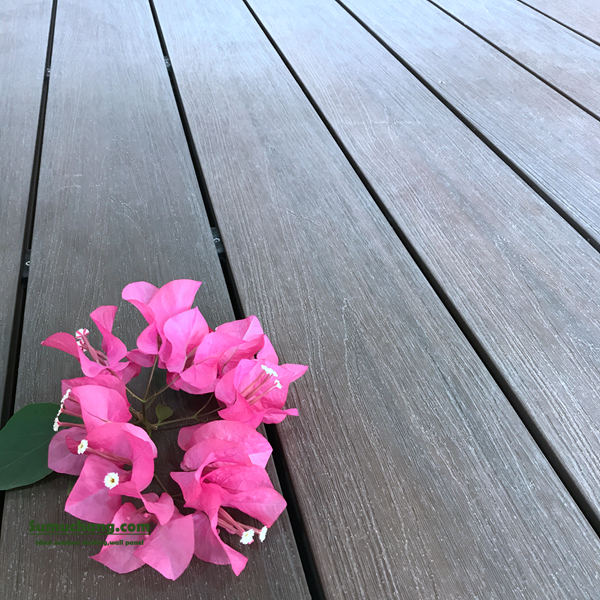
Kahve kompozit zemin kaplama levhalarına, görsel çekiciliklerini ve performanslarını artırmak için son rötuşlar eklenir. Bu, ek kayma direnci sağlayan yüzey işlemlerini veya doğal ahşabın görünümünü ve hissini taklit eden kabartmalı dokuları içerebilir. Bu geliştirmeler sadece zemin kaplamasının estetik niteliklerini iyileştirmekle kalmaz, aynı zamanda dış mekan kullanımı için daha güvenli ve daha konforlu hale getirir.
Kahve kompozit zemin kaplamasının bir diğer önemli yönü de çevresel etkisidir. Üretiminde geri dönüştürülmüş malzemelerin kullanılması, atıkları ve işlenmemiş kaynaklara olan ihtiyacı önemli ölçüde azaltır. Ayrıca, üretim süreci enerji tüketimini ve emisyonları en aza indirecek şekilde tasarlanarak sürdürülebilirliğe daha fazla katkıda bulunur. Tüketiciler çevre konusunda daha bilinçli hale geldikçe, kahve kompozit zemin kaplaması gibi kompozit malzemelere olan talep de artmaya devam etmektedir.

Performans açısından, kahve kompozit zemin kaplaması geleneksel ahşap zemin kaplamasına göre çok sayıda avantaj sunar. Doğal ahşapta sık karşılaşılan sorunlar olan nem, küf ve böceklere karşı son derece dayanıklıdır. Bu direnç, daha az bakım gereksinimi ve daha uzun kullanım ömrü anlamına gelir ve bu da onu dış mekanlarını geliştirmek isteyen ev sahipleri için uygun maliyetli bir seçim haline getirir. Sert hava koşullarına bükülme veya solma olmadan dayanabilmesi, zemin kaplamasının zaman içinde güzelliğini ve işlevselliğini korumasını sağlar.
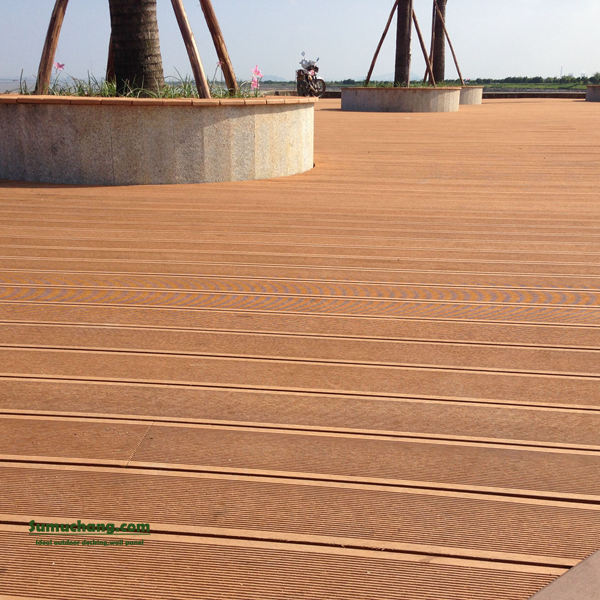
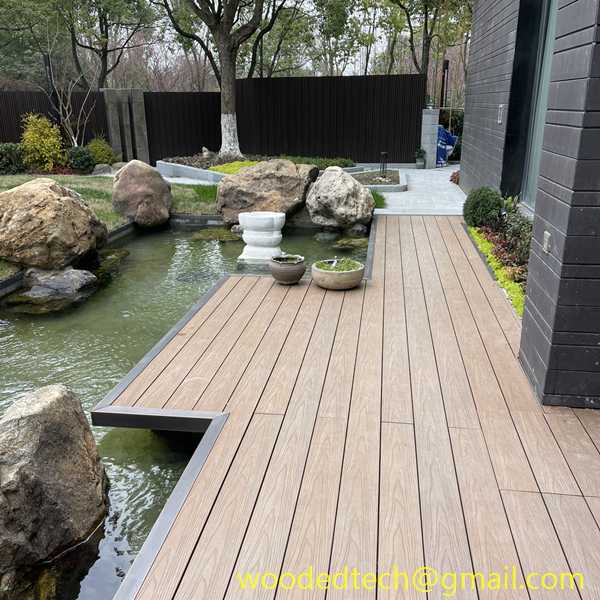
Kahve kompozit zemin kaplamasının sıcak ve davetkar rengi, onu teraslar, güverteler ve yürüyüş yolları dahil olmak üzere çeşitli dış mekan uygulamaları için mükemmel bir seçim haline getirir. Çok yönlülüğü, her türlü ev stilini tamamlayabilecek yaratıcı tasarım seçeneklerine olanak tanır. İster modern bir kentsel ortamda ister rustik bir kırsal ortamda kullanılsın, kahve kompozit zemin kaplaması açık havada yaşamayı ve dinlenmeyi teşvik eden bir atmosfer yaratabilir.
Daha fazla insan dış mekanlarını geliştirmek istedikçe, kahve kompozit zemin kaplamasının cazibesi artmaya devam ediyor. Ahşap benzeri estetiği, dayanıklılığı ve çevre dostu olmasının benzersiz kombinasyonu, onu hem ev sahipleri hem de tasarımcılar için önde gelen bir seçenek olarak konumlandırıyor. Kahve kompozit zemin kaplamasını seçerek, bireyler sadece güzel değil aynı zamanda sürdürülebilir ve uzun ömürlü davetkar dış ortamlar yaratabilirler.