 English
  Español
  Français
  Português
  Deutsch
  Italiano
  Русский
  العربية
  简体中文
简体中文  香港中文
香港中文  한국어
한국어  日本語
日本語  Türkçe
  Nederlands
  Bahasa Indonesia
 Dimensional Accuracy of Gardenis Composite Decking
Before any shipment occurs, one of the primary evaluations of gardenis composite decking involves assessing its dimensional accuracy. This step ensures that each board conforms precisely to the specified lengths, widths, and thicknesses required for effective installation. Accurate dimensions are crucial as they affect the ease of installation and the overall aesthetics of the outdoor landscape. Boards that do not meet the exact specifications may lead to complications during assembly, resulting in uneven surfaces or gaps that can detract from the sleek appearance of a finished deck.
Each batch of decking is subjected to rigorous measurements using calibrated tools that evaluate not only the length and width but also the thickness at multiple points along the board. This meticulous process guarantees uniformity throughout the entire production run, ensuring that customers receive a high-quality product that meets their expectations.
Density and Its Importance in Composite Decking
The density of gardenis composite decking is another critical factor during quality inspections. Density impacts the product’s strength, durability, and overall performance in various environmental conditions. During testing, samples taken from different points in each production run are weighted and measured to determine if they meet the established density standards.
A higher density typically indicates a more durable product, which is essential for outdoor applications exposed to foot traffic, weather changes, and other external factors. Inspectors look for consistent density across all samples, as variability can lead to weak points that may fail under stress, ultimately compromising the integrity of the decking.
Impact Resistance Testing for Durability
Impact resistance is a significant consideration for gardenis composite decking, especially in areas prone to heavy foot traffic or potential falling objects. Testing for impact resistance involves dropping a specified weight from a predetermined height onto the decking boards. This simulates the kind of stress and force the decking may encounter in everyday use.

The results of these tests provide vital information on how well the decking can withstand impacts without cracking or suffering other forms of damage. Pass rates for impact resistance tests are set high, ensuring that only those products which can endure the rigours of outdoor life are approved for shipment.
Water Absorption and Weather Resistance
Water absorption is a crucial test for gardenis composite decking, particularly given its application in outdoor settings where exposure to moisture is inevitable. During this test, samples are submerged in water for a specified duration, after which the weight increase is measured to determine the amount of water absorbed.
Low water absorption rates are essential for preventing warping, swelling, or mildew development, which can compromise the decking’s functionality and appearance. Only products that demonstrate exceptional water resistance are cleared for shipment, ensuring that customers receive decking that will endure the test of time in various weather conditions.
Colour Stability and Aesthetic Appeal
The colour stability of gardenis composite decking is evaluated through exposure to ultraviolet light as part of the quality control process. This testing simulates the long-term effects of sunlight on the product, allowing inspectors to assess the extent to which the colour may fade or change over time.
A product that maintains its colour integrity not only enhances the visual appeal of outdoor spaces but also reflects the quality of materials used in its production. By ensuring that gardenis composite decking meets stringent colour stability criteria, manufacturers can assure customers that their investment will look beautiful for years to come.
Bending Strength and Structural Integrity
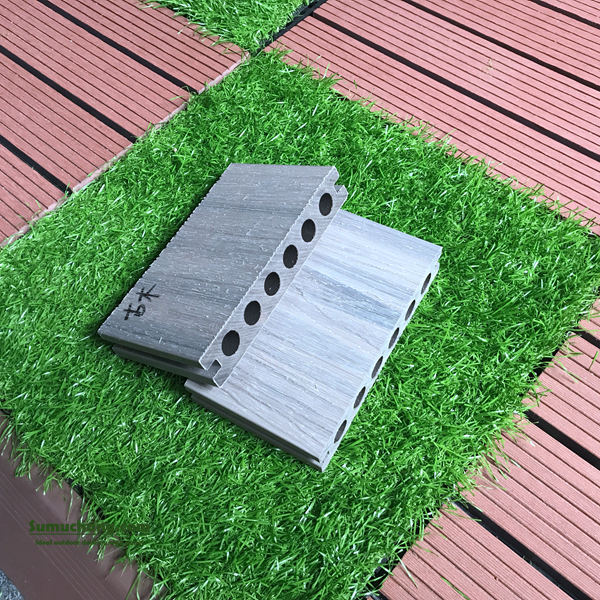
Finally, evaluating the bending strength of gardenis composite decking is essential for understanding how well it can support weight without bending or breaking. This test involves applying a specified force to the centre of a board supported at both ends, measuring how much it flexes under pressure.
High bending strength is vital for ensuring that the decking can withstand the weight of furniture, foot traffic, and other loads typical in outdoor settings. Any board that fails to meet the required bending strength is rejected, ensuring that only the most structurally sound products reach the customer.