 한국어
 English
 Español
 Français
 Português
 Deutsch
 Italiano
 Русский
 العربية
 简体中文
 香港中文
 日本語
 Türkçe
 Nederlands
 Bahasa Indonesia
Profile Design Sets the Deck’s Working Limits
From an extrusion mold design engineer’s perspective, a decking board is a structural profile shaped by its intended span, support spacing, fixing method and exposure. The best uses for top composite decking brands depend not only on the surface finish or colour, but on whether the cross-section suits the loads and site conditions. A board for a private garden terrace may have different requirements from one specified for a hotel walkway, pool surround or public landscape project, where foot traffic and maintenance demands are higher.
Profile geometry determines how material is distributed through the board. Increasing thickness or adding material around the underside can improve stiffness, but it also increases weight and resin consumption. The mold must form those dimensions consistently, with enough control over wall thickness and cooling to limit distortion. A well-designed profile balances bending performance, material use and dimensional stability rather than simply making the board heavier.
Hollow and Solid Structures Suit Different Uses
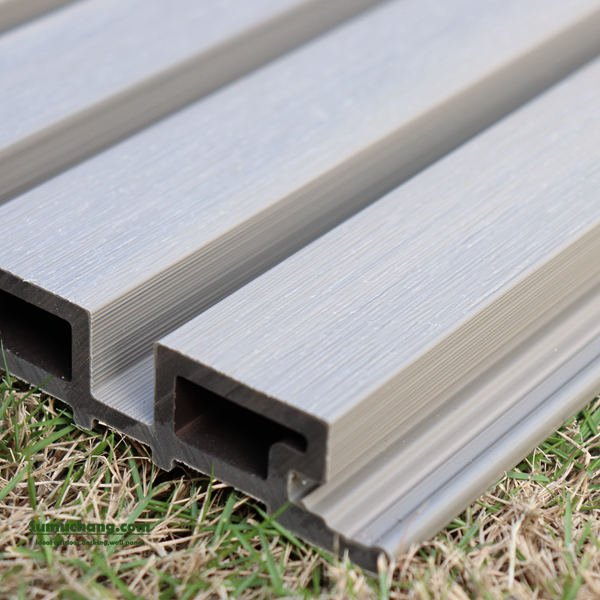
Hollow boards reduce weight and material use by placing air channels inside the profile. This can make handling easier for installation teams and lower transport costs, particularly on larger projects. Internal webs separate the cavities and support the top surface. Their number, spacing and thickness matter: webs that are too thin may deform during extrusion or provide inadequate support, while poorly placed walls can create uneven stiffness across the board. Hollow profiles are often practical for residential decks and raised areas where the specification permits the recommended joist spacing.
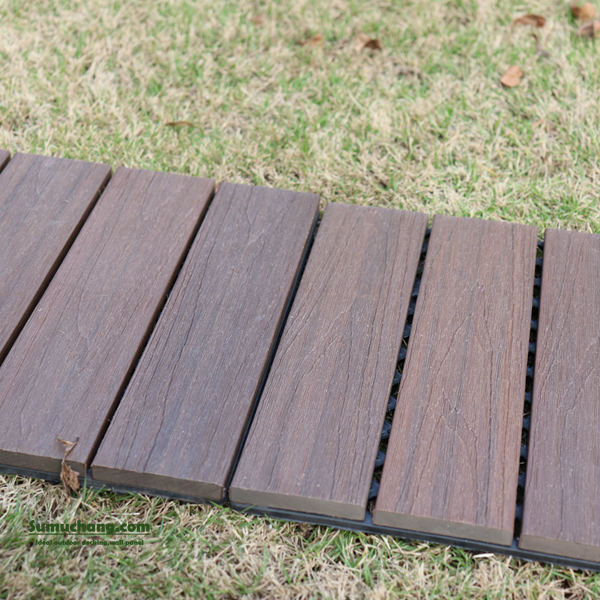
Solid boards use more material and are generally heavier, which can increase product and freight costs. Their continuous section can be useful in areas expected to receive more frequent foot traffic or where a dense, substantial feel is specified. Solid construction does not remove the need to check span limits, fixing instructions or thermal movement. A dense profile can still bend if support spacing is excessive, and it places greater handling demands on installers. Project selection should follow tested load data and the manufacturer’s installation guidance, not assumptions based on weight alone.
Ribs, Webs and Wall Thickness Control Performance
Ribs on the underside stiffen a board without filling the full cross-section with material. Longitudinal ribs can improve bending resistance along the span, while transverse webs help maintain the shape of hollow chambers. The design has to account for how molten WPC flows through the mold. Abrupt changes in section can slow or accelerate flow, causing inconsistent wall thickness, surface defects or stress as the profile cools. Smooth transitions and balanced material distribution help produce boards with more repeatable dimensions.

Rib placement also affects installation. Underside geometry needs to leave suitable access for clips or other approved fixing systems. If a rib obstructs the fastener, installers may have to alter the fixing position, risking inconsistent gaps or damage to the board. Mold design and installation design therefore need to be considered together. For procurement teams comparing top composite decking brands, useful questions include the permitted support spacing, fixing compatibility, profile tolerances and performance evidence for the exact board being specified.
Surface Patterns Affect Grip, Cleaning and Appearance
Embossed grain, brushed finishes and narrow grooves give a board its visual character, but surface pattern also affects everyday use. Deeper grooves can channel small amounts of water and create a pronounced timber-like appearance; they can also collect soil, leaves and debris. A shallower texture may be easier to clean, although its wet slip performance must be established through appropriate testing rather than judged by appearance. Pool surrounds, restaurant terraces and accessible routes should be assessed against the relevant project requirements and maintenance routine.
Texture is formed at the mold surface or through downstream embossing, depending on the production process. Pattern depth and consistency need to be controlled across the board so that wear and appearance remain uniform. A visually convincing grain does not compensate for an unsuitable profile or poor drainage detail. Designers should coordinate board texture with slope, runoff, cleaning access and the intended character of the outdoor space, especially where adjacent boards may experience different levels of shade and moisture.
Match the Profile to the Outdoor Application
For garden terraces, a lighter hollow profile can offer efficient handling and economical material use when the support layout meets the product specification. Commercial promenades, hospitality decks and communal courtyards may call for a profile with greater stiffness, verified load capacity and a fixing system suited to repeated foot traffic. Rooftop projects benefit from reviewing dead load early, since board weight combines with substructure, planters and other finishes. In every case, the appropriate choice comes from project conditions and test data, not a general ranking of brands.
Installation performance depends on more than the board cross-section. Fitters need clear guidance on joist spacing, expansion gaps, end-to-end joints, ventilation and cut-edge treatment. Consistent extrusion tolerances make it easier to maintain straight lines and even gaps, while a profile designed around its clip system can reduce site adjustments. Specifiers evaluating top composite decking brands should compare profile drawings, technical data, warranty conditions and installation instructions together. That approach links mold design decisions to the finished deck’s strength, cost, weight and long-term service requirements.