 English
 Español
 Français
 Português
 Deutsch
 Italiano
 Русский
 العربية
 简体中文
 香港中文
 한국어
 日本語
 Türkçe
 Nederlands
 Bahasa Indonesia
Supplier Evaluation Starts with the Formula
Choosing an overseas supplier for a composite decking bar top requires more than comparing board prices, catalogue photographs, or delivery promises. The formulation determines whether the finished product will resist moisture, ultraviolet exposure, thermal movement, stains, and repeated loading in a commercial outdoor setting. As a WPC formulation development engineer, I first ask for the complete material specification, including wood fibre species, polymer type, fibre percentage, coupling agent, pigments, lubricants, stabilisers, and recycled content. A supplier that cannot explain these inputs clearly is difficult to qualify for long term projects.
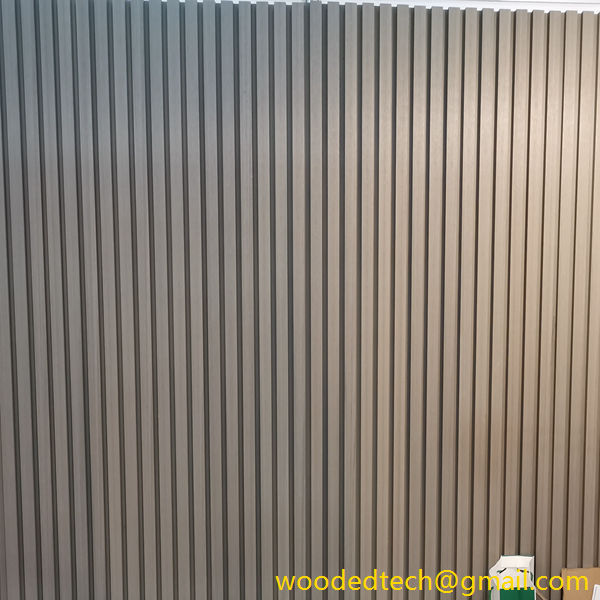
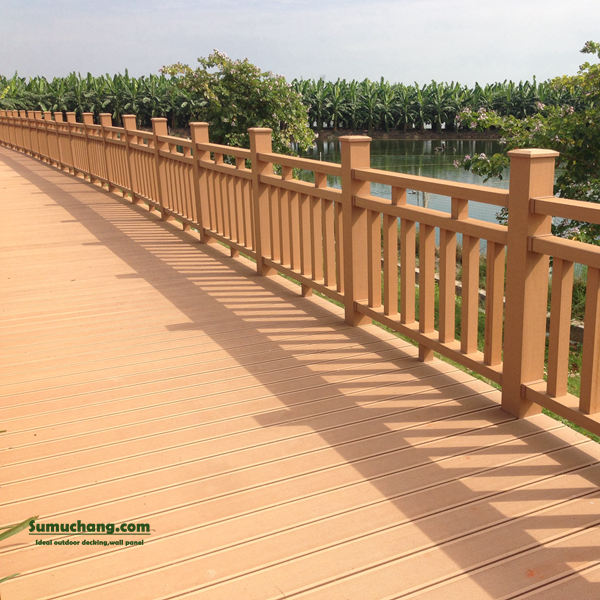
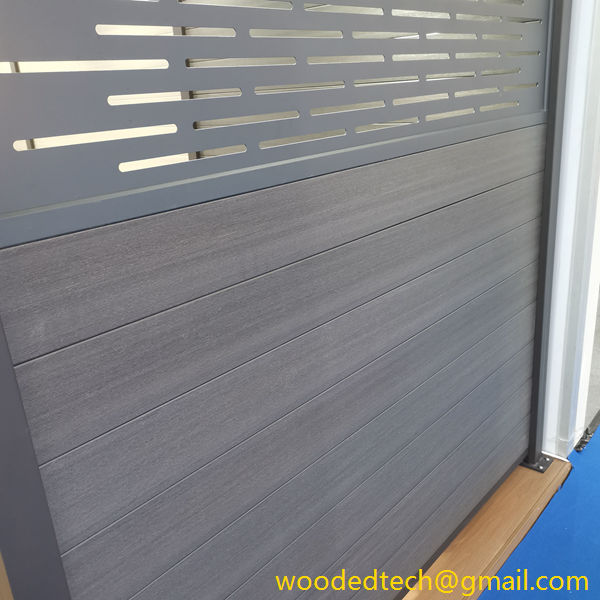
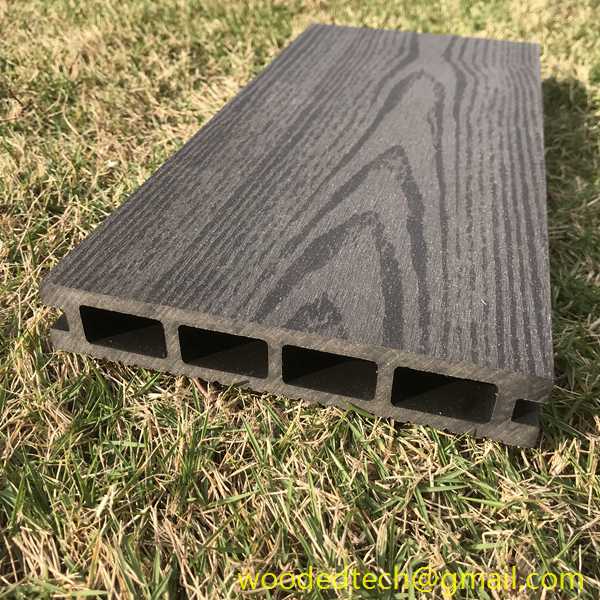
The same formula may serve decking, wall cladding, fencing, pergolas, and landscape products, but the performance target changes with the application. A bar top needs a stable, smooth surface, reliable screw retention, low water absorption, and sufficient stiffness around cut-outs and support points. Decking must also manage foot traffic and slip requirements, while cladding needs stronger resistance to weathering and dimensional change. Reliable suppliers design the compound around the service environment rather than selling one generic recipe for every product.
Balancing Wood Fibre and Plastic
Wood fibre gives WPC its natural appearance, useful stiffness, and lower material cost, yet a high fibre ratio increases sensitivity to water and processing variation. Many outdoor profiles perform well with a controlled fibre content in the region of 50 to 65 per cent by weight, although the correct figure depends on fibre size, drying quality, polymer selection, and profile geometry. Fibre must be properly dried before extrusion. Excess moisture can create voids, foaming, rough surfaces, weak weld lines, and inconsistent dimensions.

The plastic phase binds the fibres and protects the profile from moisture. Polyethylene is widely used for outdoor WPC because it offers impact resistance and workable processing conditions, while polypropylene can provide higher stiffness and temperature resistance at a different cost. Virgin polymer can improve consistency, but carefully selected recycled polymer may reduce cost without damaging performance. The supplier should provide batch records and test data rather than relying on the general statement that the board is environmentally friendly.
Additives That Protect Outdoor Performance
Additives need to be selected as part of a system. A maleic anhydride grafted coupling agent improves adhesion between hydrophilic wood and hydrophobic plastic, helping reduce fibre pull out and water penetration. Lubricants support stable extrusion and surface quality, but excessive lubrication can reduce bonding and lower mechanical strength. UV absorbers and hindered amine light stabilisers help limit colour fading, chalking, and polymer degradation. Biocides may also be required where local regulations and moisture exposure create a biological risk.

Colourants deserve particular attention for a composite decking bar top because dark colours absorb more solar heat and can increase thermal expansion. Exterior pigments should be tested after accelerated weathering, not approved from an unexposed colour chip. Ask the supplier for water absorption, flexural strength, impact resistance, colour retention, slip behaviour, and dimensional change data. Testing should cover finished profiles from production tooling, since laboratory plaques do not always represent the cooling rate, skin structure, or internal stress found in commercial extrusion.
Cost Control Without Shortening Service Life
A low quotation can conceal costly compromises. Suppliers may reduce polymer quality, increase mineral filler, use poorly sorted wood flour, or lower the coupling agent and stabiliser package. These changes can make extrusion cheaper while increasing warping, surface cracking, fastener failure, and maintenance claims. Cost control is more reliable when the buyer agrees a controlled formulation range, approved raw material sources, moisture limits, colour tolerances, and a change notification process before placing volume orders.
Tooling and production control also affect the landed cost. A supplier with precise temperature zones, calibrated feeders, vacuum sizing, controlled cooling, and regular profile inspection will produce fewer rejects and more consistent lengths. For overseas procurement, calculate the full cost of packaging, container utilisation, import duty, replacement stock, and after-sales handling. A slightly higher board price may be commercially sensible if it delivers stable batches and reduces installation waste across a large project.
Qualification for International Supply
Before approving a supplier, request a representative sample made on the intended production line, not a hand-finished development piece. Inspect the bar top for flatness, edge integrity, colour uniformity, screw holding, stain removal, and cut surface quality. Expose samples to heat, water cycling, and ultraviolet light, then compare mass, dimensions, colour, and surface condition. For decking and pergola applications, review the installation span, fixing method, ventilation requirements, and support spacing supplied by the manufacturer.
Reliable international partners also document packing standards, batch identification, inspection points, and corrective action procedures. Packaging should prevent corner damage and moisture accumulation during sea freight, especially where profiles are stacked for several weeks. Clear communication between the formulation engineer, quality inspection supervisor, installation technician, and export team prevents technical details from being lost between quotation and shipment. A supplier able to connect formula design with production discipline, testing, packaging, and technical support is far more likely to deliver a composite decking bar top that retains its appearance and function throughout its intended outdoor life.