 한국어
 English
 Español
 Français
 Português
 Deutsch
 Italiano
 Русский
 العربية
 简体中文
 香港中文
 日本語
 Türkçe
 Nederlands
 Bahasa Indonesia
Export Packaging Starts With the Decking Specification
For a packaging engineer, producing composite decking for pool deck projects efficiently means planning protection alongside extrusion, not adding it as an afterthought. Poolside boards may travel thousands of kilometres by truck, container ship and local delivery vehicle before installation. During that journey, bundles face vibration, shifting loads, humidity and repeated handling. Packaging must preserve straightness, surface finish and usable board ends while allowing the factory to pack consistently at production speed.
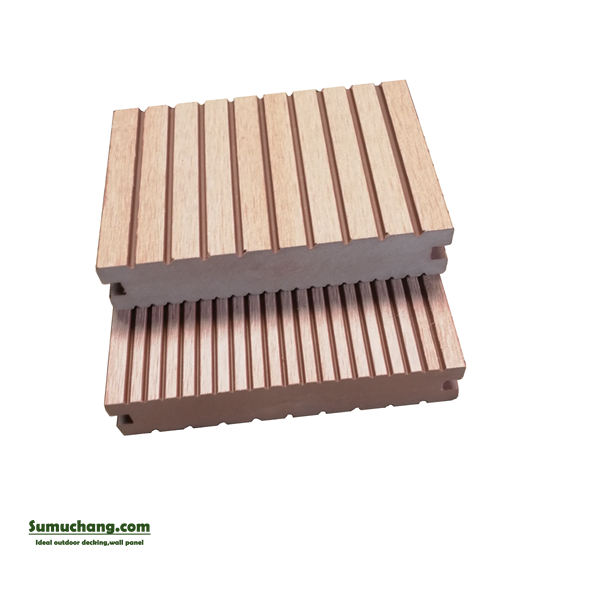
The packaging plan begins with the product dimensions and order mix. Board length, width, profile shape, surface embossing and accessories determine bundle size and support points. Hollow profiles need support that limits local crushing, while capped boards require clean contact surfaces to prevent abrasion or pressure marks. A mixed container of decking, wall panels and trim profiles also needs clear separation: long boards can flex against shorter items, and loose fittings can scratch decorative faces. Engineers should define package layouts for each product family rather than assuming one bundle design suits every extrusion.

Control Support, Compression and Board Movement
Long boards can bow if bundles are supported unevenly or stored under excessive load. Crosswise supports should be positioned at regular intervals, with end supports close enough to limit overhang during lifting and transit. The precise spacing depends on board stiffness, length and bundle weight, so trial shipments and supplier data are more reliable than a universal rule. Straps must hold the pack together without indenting edges or deforming hollow sections. Wide strapping, corner protectors and appropriately set tension help distribute pressure across the load.
Movement inside the package is a common source of cosmetic damage. Extruded boards should be aligned before wrapping, with separators or protective sheets between surfaces that may rub. Bundles need enough restraint to resist vibration, but they should not be clamped so tightly that thermal expansion or strap pressure leaves marks. Packaging lines can use simple alignment guides and strap-tension checks to reduce variation between shifts. A repeatable sequence also speeds packing: count, align, insert separators, protect corners, strap, wrap, then verify the label and package dimensions.
Manage Moisture and Container Conditions
Ocean freight exposes packaging to changing temperature and humidity. Plastic film can shield boards from splashes and dirt, but a fully sealed pack may trap moisture if wet products or damp separators are enclosed. Boards and packaging materials should be dry before wrapping. Where the route and container conditions justify it, ventilation openings or moisture-control materials can reduce condensation risk. These measures should be tested against the actual packaging configuration, since excessive openings can admit water during storage or handling.
Container loading is part of the protection system. Heavy bundles belong low and should be distributed to avoid concentrated floor loads; lighter, more fragile profiles should not be crushed beneath them. Dunnage and blocking prevent cargo from shifting, while suitable lashing secures loads against vessel movement. Teams should check container cleanliness, dryness, floor condition and odour before loading. Photographs of the empty container, loading stages and final stow provide useful evidence when investigating transit damage and help factories improve recurring weak points.
Protect Wall Panels and Profiles in Mixed Orders
Wall panels often have broad decorative faces that show scuffs easily, while narrow trims and finishing profiles can slip between larger bundles. Each item needs a defined location and restraint method. Face-to-face stacking with protective interleaves can reduce surface contact, provided the separators do not transfer ink, moisture or grit. Small profiles can be grouped in labelled cartons or rigid sleeves, then secured to the main load without bearing against exposed board edges. Clear identification helps warehouse staff distinguish lengths, colours and installation components during unloading.
Packaging dimensions should also reflect handling equipment and destination practices. A compact pack may improve container utilisation, but an oversized or unstable bundle can be difficult to unload safely. Standardised bundle weights, visible lifting points and consistent labels reduce handling errors at ports and distributor warehouses. Labels should show product reference, colour, length, quantity, batch and handling orientation, with barcodes where the customer’s receiving system supports them. Accurate package data also makes customs documentation and inventory checks more efficient.
Validate the Pack Before Scaling Exports
Factories can evaluate a new packaging design through controlled handling trials, representative road transport and feedback from the first ocean shipments. Inspection should record chipped ends, scuffed surfaces, bowing, crushed profiles, wet packaging and strap impressions. Damage patterns point to different causes: repeated marks near supports suggest contact pressure, while shifted bundles indicate inadequate blocking or restraint. Corrective action may involve changing support spacing, separator material, wrapping method or container loading sequence rather than adding more packaging indiscriminately.
Packaging performance should be balanced with material use and line efficiency. Recyclable separators, right-sized cartons and reusable handling frames can reduce waste where return logistics make reuse practical. At the same time, savings are only real if boards arrive ready to install. A cost model should include packaging labour, container utilisation, claims, replacement freight and the risk of delayed projects. For manufacturers exporting composite decking for pool deck installations, a documented pack specification and routine inspection create a reliable link between extrusion quality, transport protection and the customer’s finished outdoor surface.