 한국어
 English
 Español
 Français
 Português
 Deutsch
 Italiano
 Русский
 العربية
 简体中文
 香港中文
 日本語
 Türkçe
 Nederlands
 Bahasa Indonesia
Set a Repeatable Pre-Shipment Inspection Plan
Efficient mass production of composite deck footings depends on more than the components beneath a deck. The WPC boards, posts, trims and related outdoor products must arrive at site within specification, so installers can build to plan without sorting inconsistent stock or adapting their methods. As a quality inspection supervisor, I treat pre-shipment testing as a controlled production gate: samples are drawn from identified batches, results are recorded against agreed acceptance criteria, and any failure is traced before goods are released.
The inspection plan should reflect the product, its intended use and the buyer’s technical requirements. A decking profile exposed to foot traffic and weather needs different checks from a decorative screen component. Before production, quality, engineering and sales teams should confirm drawing revisions, test methods, tolerances, packaging requirements and sampling frequency. During inspection, record the production line, batch number, date, instrument identification and measured result. This evidence helps the factory identify process drift and gives overseas customers a clear basis for approval.
Dimensional Accuracy and Density Control
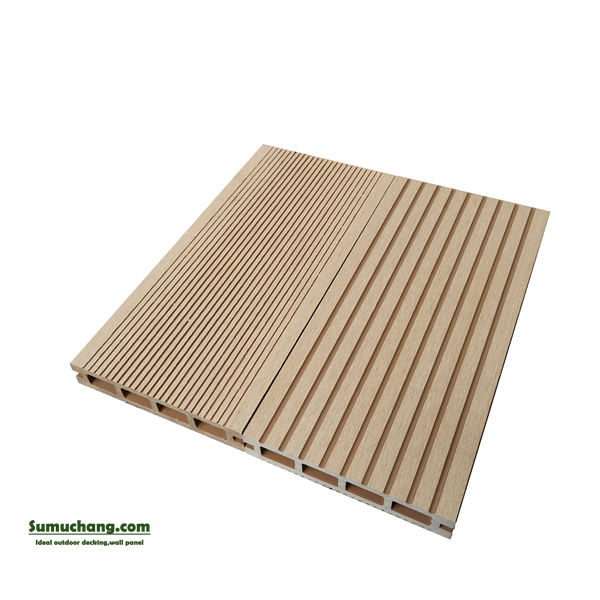
Dimensional checks establish whether profiles will fit their supporting structure and maintain consistent spacing. Measure width, thickness and length at defined points using calibrated callipers, tapes or gauges. Check profile shape, wall thickness and any fastening groove or clip feature against the approved drawing. Measurements should account for temperature, since WPC can expand or contract between the factory floor and an outdoor installation. A consistent sampling method is important: measuring only the first piece from a run will not reveal variation later in the shift.
Density is a useful indicator of material consistency, particularly where recycled polymers, wood flour and additives are blended in batches. Weigh a specimen of known dimensions and calculate its density, following the agreed method and conditioning requirements. A result that is too low may indicate voids, poor compaction or an incorrect formulation; an unusually high result can point to a dosing error or excess filler. Density alone does not prove performance, but trends across batches can alert production staff to investigate feed rates, moisture content and extrusion conditions before more material is made.
Impact, Water and Colour Performance
Impact resistance testing checks whether a profile can tolerate knocks during handling and normal use without cracking or breaking. Use the specified specimen size, conditioning period and test arrangement, then record both the result and the failure mode. A brittle fracture may suggest a formulation or processing issue, while local deformation can indicate a different weakness. Where products are tested at more than one temperature, keep those results distinct; cold-conditioned material may respond differently from a sample tested at room temperature.
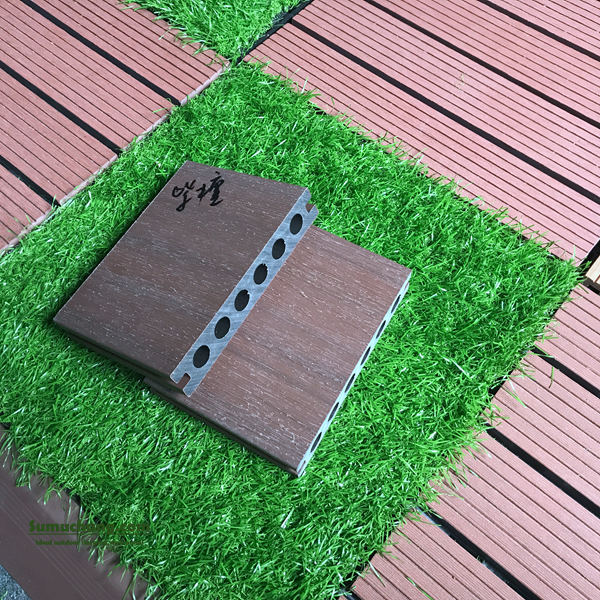
Water absorption testing helps assess dimensional and material stability during outdoor exposure. Dry and weigh specimens as required by the method, immerse them for the defined period, then measure the change in mass and, where specified, dimensions. High absorption can be associated with excessive wood content, poor encapsulation or process variation. Colour stability is assessed against a retained reference or approved colour standard, using controlled lighting and a consistent comparison method. For UV or weathering tests, document exposure conditions and the evaluation interval. These tests do not remove the need for sensible drainage and installation detailing, but they provide evidence that products meet the agreed performance requirements.
Bending Strength and Appearance Inspection
Bending strength matters because decking boards span between supports and carry people, furniture and temporary loads. Test specimens at the stated span and loading rate, recording the force at failure or the specified flexural measurement. Confirm that specimen orientation, support spacing and conditioning match the standard or customer specification. A weak result may lead to excessive deflection or fracture in service, so investigate the production batch rather than relying on a visual check. Pairing bending data with dimensional and density records can help distinguish a material issue from an incorrect profile geometry.

Appearance inspection is performed across the production run, not merely on a presentation sample. Under suitable, consistent lighting, examine colour uniformity, surface texture, scratches, stains, exposed fibres, chipped edges, die lines, warping and visible voids. Define acceptable limits in advance, including viewing distance and which faces are customer-visible. Inspecters should not reject normal texture variation that is part of the approved design, but should flag defects that affect fit, safety or appearance. Photographs linked to batch records make decisions easier to review between factory teams and buyers.
Release Controls for Reliable Deck Projects
Before loading, verify that inspection records are complete, non-conformances have been resolved, and the released batch matches the order and approved colour. Check bundle labels, quantities, profile identification and packaging protection, because transit damage can undermine otherwise compliant production. For composite deck footings and the surrounding deck system, consistent board dimensions and verified mechanical performance support predictable installation and help keep site teams on schedule.
A useful quality system turns test results into production action. Review trends by line, shift and formulation, then set investigation triggers for repeated movement towards tolerance limits, even if individual samples still pass. Hold affected stock until the cause is understood, document corrective action and verify the next run. This disciplined approach gives manufacturers a practical way to protect product consistency at scale and gives distributors, contractors and specifiers confidence in outdoor WPC products before shipment.