 English
 Español
 Français
 Português
 Deutsch
 Italiano
 Русский
 العربية
 简体中文
 香港中文
 한국어
 日本語
 Türkçe
 Nederlands
 Bahasa Indonesia
Packaging Starts with the Project Specification
Export packaging for outdoor wood plastic composite products begins before production is complete. A packaging engineer needs the order profile, destination, transport route and installation conditions to determine how decking boards, wall panels and trim should be protected. A shipment travelling in a dry container to a nearby port faces different risks from one exposed to repeated handling, humid storage and long inland transit after arrival. For projects using a composite deck for concrete, the packaging plan must also keep board lengths, colours and accessories clearly identified so installers can match materials to drawings and work sequences.
Factories first confirm product dimensions, surface finish, quantity per bundle and any special requirements such as mixed lengths or project-specific labels. Hollow profiles can be vulnerable to crushing at unsupported points, while embossed surfaces may scuff if boards rub together. Packaging specifications therefore account for the product’s shape and finish, not just its total weight. Samples and trial packs help confirm that strapping pressure, separators and edge protection will not mark or deform the material during storage and transit.

Protecting Boards from Movement and Moisture
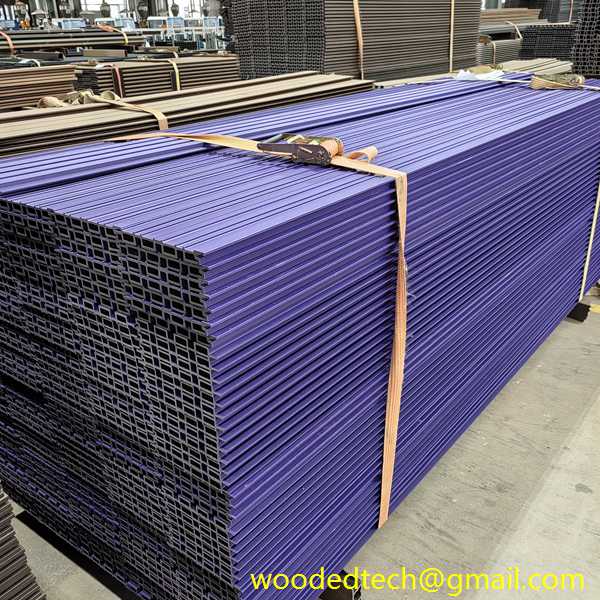
Decking boards are generally stacked on flat, aligned supports, with spacers positioned to prevent sagging and reduce friction between surfaces. Protective film or non-woven separators can help preserve colour and texture, but they need to suit the product and climate. Film that is too tight may trap moisture or leave marks after prolonged heat exposure. In humid routes, the pack design should allow sensible ventilation while limiting direct contact with rain, condensation and dirty container floors.
Bundles are secured with straps and corner guards to prevent compression damage at the edges. The strap layout matters: excessive tension can crush hollow chambers or leave impressions, particularly on softer profiles and warm product. Factories can use wider straps, protective pads and carefully spaced supports to distribute pressure. Before loading, staff should check that bundles are square, stable and free from loose components. Container floors and walls are inspected as well, since protruding nails, debris or water can damage boards long before the cargo reaches the project site.
Packaging Wall Panels and Special Profiles
Wall panels, fascia boards and decorative profiles often have finishes or shapes that need more targeted protection than standard decking. Long, narrow profiles can twist if stacked unevenly, while textured faces may be vulnerable to abrasion from adjacent pieces. Individual sleeves, separators or shaped end protectors may be appropriate for premium finishes and custom colours. For profiles with different face and rear surfaces, pack orientation should be consistent and marked so warehouse teams can handle the bundle without dragging the visible face across another board.

Accessories require equal attention. Clips, screws, starter fittings and trims should be packed in sealed, labelled cartons rather than left loose among the boards. A project pack can group components by installation area or sequence, provided the carton markings correspond with the packing list. This reduces time spent sorting materials on site and helps prevent small but essential parts being misplaced during unloading. Clear labels should show product code, colour, dimensions, batch reference, quantity and handling instructions in a format that remains legible after ocean transport.
Designing for Container Loading and Export Handling
Export packs must fit the container efficiently without compromising safe handling. Bundle dimensions are planned around container width, door clearance, pallet or forklift access and the equipment available at the receiving warehouse. A packaging engineer balances board protection against wasted space: excessive packaging raises freight costs and material use, while tightly packed loads can become difficult to unload or may transfer pressure to vulnerable products. The loading plan should prevent bundles shifting under vessel motion, braking and repeated transfers between ports.
Where timber pallets or bracing are used, export rules for the destination must be checked, including applicable treatment and marking requirements. Moisture-resistant wrapping, desiccants or container liners may be considered for routes with high condensation risk, but none can compensate for wet cargo loaded into a poorly maintained container. Loading records, photographs and inspection checklists provide traceability if damage is reported. They also help production and packaging teams identify recurring issues, such as crushed corners, strap marks or surface scuffing, and revise the pack specification using evidence from actual shipments.
Keeping Project Deliveries Ready for Installation
Packaging quality is measured not only by whether products arrive intact, but by whether the site team can identify and handle them efficiently. For a composite deck for concrete, shipment labels can distinguish decking, perimeter trims and fixing components, while bundle references can correspond with the project schedule. This is especially useful when deliveries arrive in phases or are split between several installation areas. Consistent identification also supports inspection, because receivers can compare batch and quantity details with purchase documents before bundles are opened.
Packaging specifications should be reviewed with production, quality inspection, logistics and the customer’s project team. Feedback from receiving inspections and after-sales reports can reveal whether protection is appropriate for the route, product finish and handling chain. Factories can then refine separators, strapping, bundle size and labelling without adding unnecessary material. The result is an export solution that protects decking, wall panels and profiles from factory dispatch through port handling to site storage, while keeping each project’s materials organised for installation.